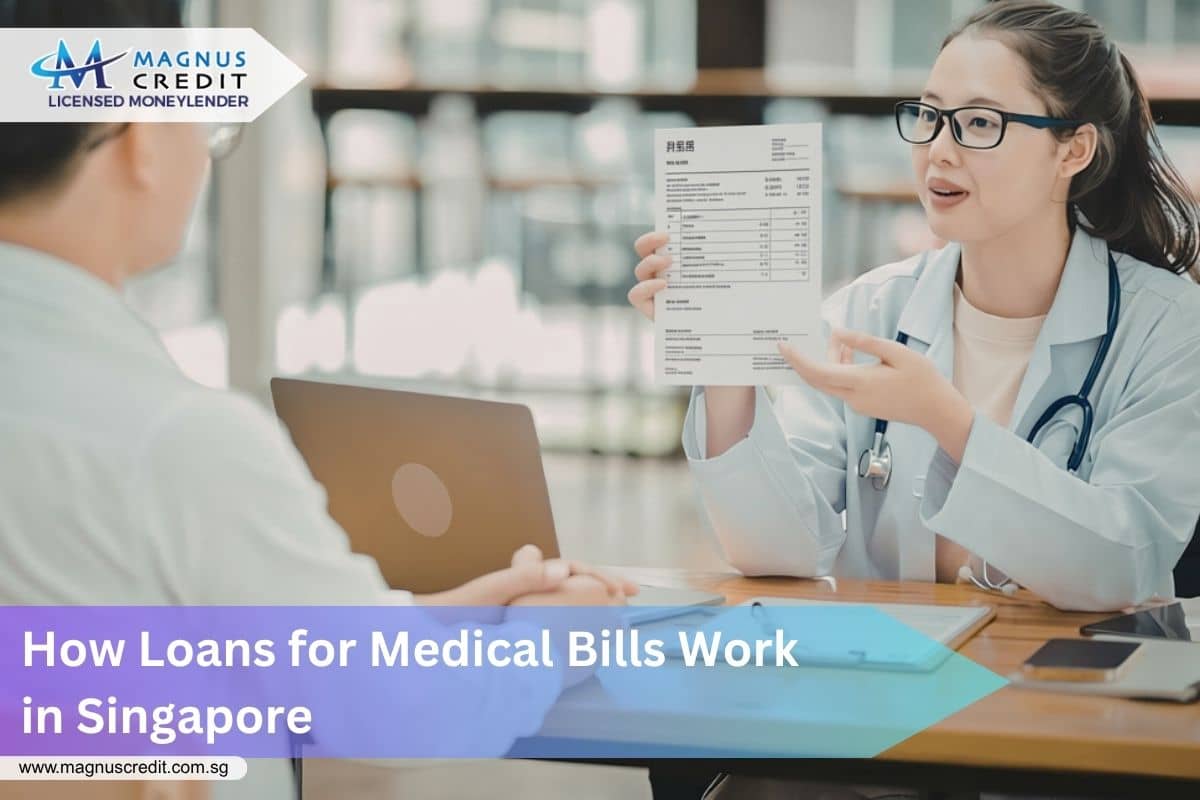
Medical bills are stressful because they rarely arrive at a convenient time. A hospital admission, specialist procedure, dental surgery or urgent treatment for a family member can create a cash gap even when you have MediShield Life, MediSave, employer insurance or a private Integrated Shield Plan.
That is where loans from a licensed money lender in Singapore for medical bills may come in. They are typically unsecured loans used to pay healthcare expenses now, then repaid in instalments over an agreed period. The key is to understand what the loan does, what it does not do and which safeguards apply before you sign anything.
What Is A Loan For Medical Bills?
A loan for medical bills is financing taken to cover medical-related costs that you cannot pay upfront. It may be marketed as a medical loan or handled as a personal loan for medical use, depending on the lender. Even a foreigner loan if you’re an expat living in Singapore.
The money can help with common out-of-pocket healthcare costs such as:
- Hospital deposits and final bills
- Specialist consultations and diagnostic scans
- Surgery deductibles, co-insurance and non-subsidised costs
- Dental, optical or outpatient procedures not fully covered by insurance
- Medication, rehabilitation and follow-up treatment
- Medical expenses for a spouse, parent, child or dependant
A medical loan is not a subsidy, insurance payout or bill waiver. It does not reduce the amount charged by the clinic or hospital. It simply spreads the payment over time, so the most important question is whether the monthly repayment is manageable after your regular household expenses.
Check Your Non-Loan Options First
Before borrowing, check how much of the bill can be covered by Singapore healthcare financing schemes, insurance or direct hospital arrangements. This can reduce the loan amount and total interest paid.
MediShield Life helps Singapore Citizens and Permanent Residents with large hospital bills and selected costly outpatient treatments, subject to claim limits, deductibles and co-insurance. It will not always cover the full bill, especially for private hospital care, higher ward classes or costs above claim limits.
MediSave can also be used for approved medical expenses for yourself or eligible family members, subject to withdrawal limits. If you have an Integrated Shield Plan, company medical insurance or personal accident policy, ask the insurer what is claimable and how long reimbursement will take.
You can also ask the hospital or clinic about:
- An itemised bill estimate before treatment
- Available subsidies or financial assistance
- Payment instalment arrangements with the provider
- Whether a Medical Social Worker can assess your situation
- MediFund support, if you are eligible and still unable to afford subsidised care after other help
Borrowing should usually come after these checks, not before them. Even a smaller loan can be easier to repay if MediSave, insurance or a payment plan covers part of the bill.
When Do Singapore Borrowers Use Loans For Medical Bills?
People usually consider a medical loan when the timing of payment and reimbursement does not match. For example, a clinic may require upfront payment before treatment, but your insurance claim may only be reimbursed later. A hospital deposit may be due immediately, while your family needs time to gather cash.
A loan may also be considered when a treatment is necessary but not fully covered by insurance. This can happen with dental procedures, fertility-related expenses, specialist medication, private treatment, physiotherapy or non-subsidised options chosen for shorter waiting times.
Foreigners living in Singapore may face a different issue. They may not have the same access to MediShield Life or MediSave as Citizens and PRs, and employer coverage may be limited. In those situations, a regulated loan may be one way to handle urgent costs, provided the borrower meets eligibility requirements and can repay comfortably.
The Main Borrowing Options In Singapore
There is no single best loan for every medical situation. The right option depends on urgency, amount needed, credit profile, repayment period and whether you can wait for approval.
| Option
|
How it works
|
When it may fit
|
What to watch
|
| Hospital or clinic instalment plan
|
You pay the provider over time, if available
|
You want to avoid external borrowing
|
Not always offered, terms vary by provider
|
| Bank personal loan
|
A bank lends a lump sum, usually with fixed monthly instalments
|
You have good credit and can wait for approval
|
Stricter eligibility, slower approval in some cases
|
| Licensed moneylender medical loan
|
A MinLaw-regulated moneylender assesses your income and repayment ability
|
You need faster assessment or do not qualify for a bank loan
|
Higher cost than many bank loans, legal caps still apply
|
| Credit card instalment
|
You charge the bill and convert it to instalments, if eligible
|
The clinic accepts card payment, and you can clear instalments
|
Fees, interest and credit limit constraints
|
| Family support | A relative helps with payment | You can agree clearly without financial strain | Relationship issues if repayment is unclear |
Licensed moneylenders are often considered when speed matters. For example, Magnus Credit offers same-day cash loans, a Singpass MyInfo application and verification at its Bugis office.
How Licensed Moneylender Medical Loans Work
Licensed moneylenders in Singapore are regulated by the Ministry of Law. That regulation matters because it limits what a lender may charge, how much you may borrow and how the loan must be documented.
A typical process looks like this. You submit an application, often online, with your identity and income information. The lender assesses your eligibility, existing obligations and ability to repay.
If the application is approved, you must review the contract and repayment schedule before accepting the loan. For licensed moneylenders, the loan is only properly granted after required verification and documentation are completed.
You should always verify the lender against the official Registry of Moneylenders list before sharing personal information or making any payment.
For unsecured loans from licensed moneylenders, borrowing limits are tied to annual income and residency status. The following limits apply across all licensed moneylenders combined.
| Borrower profile | Maximum unsecured borrowing |
| Singapore Citizen or PR earning less than $10,000 a year | $3,000 |
| Foreigner residing in Singapore earning less than $10,000 a year | $500 |
| Borrower earning at least $10,000 and less than $20,000 a year | $3,000 |
| Borrower earning at least $20,000 a year | 6 times monthly income |
Licensed moneylenders also face legal fee and interest caps. Interest is capped at 4% per month. Late interest is capped at 4% per month on the overdue amount only. An administrative fee, if charged, cannot exceed 10% of the principal when the loan is granted.
Late fees cannot exceed $60 for each month of late repayment. Total charges, including interest, late interest, administrative fees and late fees, cannot exceed the principal borrowed.
How To Decide How Much To Borrow
The safest medical loan is usually the smallest one that solves the immediate payment problem. Start with the full estimated bill, then subtract amounts that are likely to be covered by MediSave, MediShield Life, insurance, employer benefits, subsidies and any hospital instalment arrangement.
A simple way to estimate the loan amount is:
Estimated medical bill minus confirmed coverage minus available savings equals possible loan amount.
If the final figure is still too high, ask whether the provider can stage treatment, split the bill or confirm which parts are urgent. Do not borrow extra just because you qualify for more. A higher principal increases monthly repayment pressure and may make late fees more likely if your cash flow changes.
It also helps to separate medical costs from non-medical costs. If treatment involves travel, for example, keep hospital invoices, travel agency invoices and accommodation costs distinct.
A travel agency may use a payment platform built for travel agencies to manage client payments and reconciliation, but that is a different financial tool from a personal loan for healthcare expenses. As the borrower, you should still ask for itemised documents and borrow only for costs you can verify.
What Documents Are Usually Needed?
Documentation requirements vary by lender and borrower profile, but most lenders will need to confirm your identity, income and ability to repay. With Singpass MyInfo, some of this information can be retrieved digitally, which can make the application smoother.
You may be asked for your NRIC, FIN or passport details, proof of income, CPF contribution history, payslips, bank statements, employment pass details for foreigners or other supporting documents. For a medical loan, the lender may also ask about the purpose of the loan, such as an estimated bill, invoice, clinic letter or hospital document.
A responsible lender should not approve a loan purely because you say the need is urgent. Medical urgency does not remove the requirement to assess affordability. If a lender pressures you to sign quickly without explaining fees, repayment dates and late payment consequences, treat that as a warning sign.
Questions To Ask Before Signing
The loan contract should be clear enough that you can explain it back in your own words. If you can’t, pause and ask questions before accepting the money.
Ask these questions before signing:
- What is the exact loan principal I will receive?
- Is there an administrative fee, and how much is deducted?
- What is the monthly repayment amount and repayment date?
- What is the total repayment if I pay on time?
- What happens if I miss or delay one instalment?
- Can I repay early, and are there any fees for doing so?
- Will I receive a copy of the contract and repayment schedule?
Do not sign a blank or incomplete contract. Do not hand over your Singpass credentials. Do not pay an upfront processing fee to secure approval. A licensed lender should explain the terms, issue proper documentation and operate from its approved place of business.
When a medical loan may not be the right move
A loan is not always the best answer. If your income is unstable, you are already behind on other repayments, or the proposed instalment would force you to skip essentials, borrowing may worsen the situation.
In that case, speak to the hospital’s billing department, a Medical Social Worker, your insurer or family members before taking on debt. If the bill is for non-urgent treatment, consider postponing it until coverage and savings are clearer. If the treatment is urgent, the priority is still to avoid an unaffordable repayment plan that creates a second crisis after the medical issue.
A good rule is to test the repayment against your real monthly budget, not your best-case budget. Include rent or mortgage, food, transport, utilities, existing debts, family support, childcare and savings for follow-up appointments. If the instalment only works when nothing else goes wrong, it is too tight.
Frequently Asked Questions
Are Loans For Medical Bills Available To Foreigners In Singapore?
Some licensed moneylenders accept applications from foreigners residing in Singapore, subject to identity, income, employment pass and borrowing limit checks. Foreigners with lower annual income have stricter unsecured borrowing limits.
How Fast Can A Medical Loan Be Approved?
Approval speed depends on the lender, documents and verification process. Some licensed moneylenders offer same-day assessment and disbursement, but you should still read the contract carefully before accepting.
Is A Medical Loan Better Than Using A Credit Card?
It depends on the total cost, repayment period and your credit limit. A credit card may be convenient if you can clear the balance quickly, but interest can become expensive if the debt rolls over. Compare the full repayment amount before choosing.
Need Help Handling An Urgent Medical Bill?
If you have checked your insurance, MediSave and hospital payment options but still need short-term financing, Magnus Credit can assess your situation under Singapore’s licensed moneylending rules. Applications can be submitted through Singpass MyInfo, with transparent regulated fees and same-office verification at the Bugis office.
The right loan should help you manage healthcare costs without creating repayment stress. Review the amount you truly need, ask for clear terms and speak with Magnus Credit if you want a personalised assessment before making a decision.
If you like this article, you may want to read this article about Use a Loan Calculator Singapore Tool to Plan Repayments.